

Algae is part of the Delta
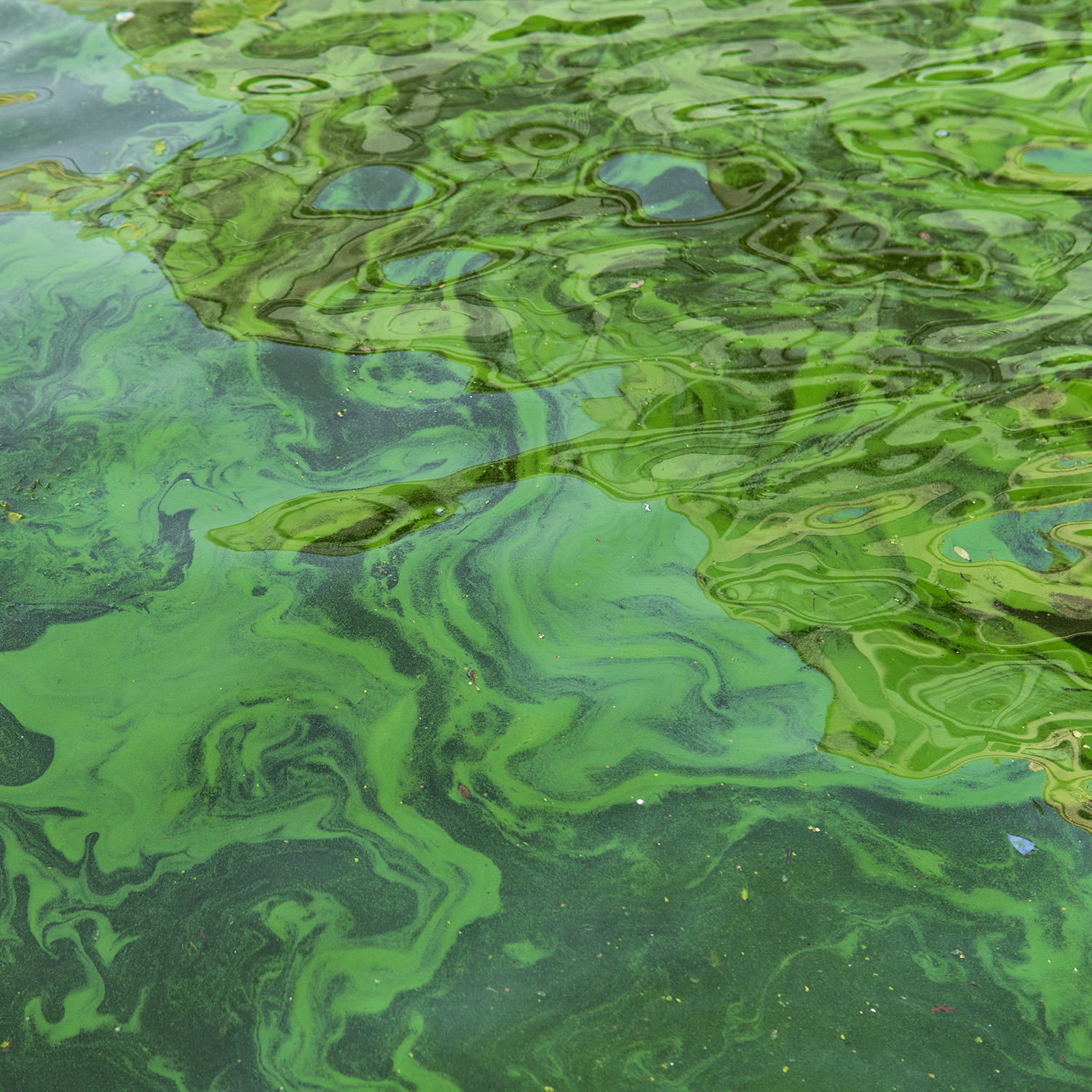
On a still August morning you will often see a green film on the water off your dock. By mid-afternoon it’s usually gone. This film — algae — lives in every Delta waterway.
The Delta Coves lagoon rises and falls with the tide, trading water with hundreds of miles of connected channels. Every tide brings in nitrogen, phosphorus, and the algae that feeds off it. In return, fish feed off the algae. The green tint or a light film is normal biology, not contamination.
What makes algae grow
Four things drive algae growth — warmth, sunlight, nutrients, and calm water. The sheltered water in our lagoon warms fast, especially in more shallow areas toward the riprap where the wind barely moves the water. The same qualities that make it ideal for keeping a boat make it a good place for algae to grow.
Aquatic plants compete with algae for nutrients while growing and feed the algae those same nutrients when they die. Moving water helps disburse these nutrients in the weeks after submersed aquatic vegetation treatment occurs.
While we cannot control water temperature or sunlight exposure, residents can have a small impact on nutrients and an even bigger impact on water movement. We cannot stop the algae from growing, but we can reduce how often algae collect at the surface and how long it stays.
Monitoring the lagoon
Two monitoring stations — the yellow buoys — report around the clock tracking dissolved oxygen, temperature, pH, water clarity, and chlorophyll-a — the green pigment in algae. Station 1 also reads temperature and oxygen — both of which rise during the day and fall at night — at three differing depths.
Lagoon appearances change
Some algae — especially the blue-green types — control their own buoyancy and rise toward the light. With circulators running during the daytime, algae cannot settle together at the top of the water. In the morning, the algae gather in a thin film you see when you wake up. A small amount spread across the surface looks like a lot. The same amount spread through the full depth is nearly invisible.
When the DCMC circulators run, they break the film up and disrupt the calm layering that lets scum form. If you have a circulator or bubbler at your own dock, running it helps in the same way.
Circulators do not remove algae from the lagoon — remember, it’s a part of the Delta ecosystem. That is why the water can look excellent at 4 p.m. and still show a bloom next morning. A morning film that clears by afternoon shows the system is working as expected.
Residents can take action
You have two options to help with algae scum in your lagoon zone — keep water moving at your dock and don’t add additional nutrients into the lagoon.
- Run your dock circulator or bubbler regularly — plus, keep it clean and well maintained.
- Keep plant and lawn fertilizer back form the water’s edge and aim sprinklers away from the riprap.
- Bag or compost clippings and leaves instead of blowing them toward the bank.
- Pick up pet waste — every time.
- Do not feed ducks, geese, and other lagoon dwellers.
Making a report
Not all algae are harmful. A few types, often called blue-green algae, can produce toxins. These algae often look like spilled paint on the surface, or bright green or teal scum along a bank, and sometimes come with a musty odor. Keep children and pets out of it.
Just remember — when in doubt, stay out.
If you suspect a bloom, follow the community’s established process. Report it to the state water quality monitoring council, then submit a community concern so Community Life knows. Include the date, time of day, location on the lagoon, and a photo if you can take one safely.
Our sensors sit at two locations and cannot see your dock at 7 a.m., so a timed report lets us check that hour in the record. Thank you for watching the water with us.